
Views: 0 Author: Site Editor Publish Time: 2026-04-15 Origin: Site


In high-pressure industrial fluid systems, the operational stakes are undeniably high. Standard on/off automation frequently proves insufficient for complex pipeline architectures. Plant operators demand precise throttling and robust high-torque capabilities. Without these features, catastrophic system failures remain a constant threat. This is exactly where the Multi-turn Electric valve Actuator becomes indispensable. It represents the industry standard for automating critical valves. Specifically, it drives valves requiring multiple 360-degree rotations to move from fully open to fully closed. We designed this technical evaluation guide directly for plant engineers and procurement managers. It will help you navigate complex purchasing decisions confidently. You must balance demanding torque requirements, surgical control precision, and seamless integration readiness. By understanding these mechanical and electrical parameters, you can upgrade your facility's safety. You will learn how to match advanced motor technologies perfectly to your specific fluid control challenges.
Mechanical Function: Converts electrical energy into high-torque mechanical motion via advanced gearboxes, specifically engineered to manage multiple full rotations (>90 degrees).
Valve Compatibility: Designed primarily for linear-motion valves like gate, globe, and needle valves, accommodating both rising and non-rising stems.
Operational Edge: Delivers surgical flow control and eliminates system water hammer effects through gradual, sustained operation.
Selection Baseline: Sizing must account for extreme axial forces, environmental ratings (IP67/NEMA 4X), and duty cycle limitations to prevent motor burnout.
At its foundation, this equipment relies on a highly efficient power transmission system. You will typically find a brushless DC electric motor serving as the primary drive mechanism. Engineers prefer brushless motors because they eliminate physical wear parts. They offer exceptional longevity and maintain high efficiency under heavy loads. The motor pairs directly with a sophisticated reduction gearbox. The electric motor spins rapidly, producing low torque. The gearbox steps down this rotational speed dramatically. This speed reduction exponentially increases the torque output. Consequently, the device generates immense twisting force capable of overcoming extreme internal fluid pressures.
Next, we must examine the engineering necessity of the hollow output shaft. Operating large industrial valves generates severe axial forces. As the valve gate pushes against pressurized fluid, it forces mechanical thrust upward. The hollow shaft design utilizes heavy-duty thrust bearings. These bearings absorb the axial thrust safely. Furthermore, the hollow center serves a critical geometric function. It allows the threaded rising spindle of the valve to pass straight through the actuator body. The spindle moves freely upward during operation. This clever structural design keeps the overall mechanical footprint compact.
Modern units also feature significant motor innovations. The adoption of reversing motors has transformed fluid modulation. These specific motors utilize dual internal windings. One winding handles clockwise rotation. The other winding manages counter-clockwise rotation. This architecture allows instantaneous direction changes. If a process requires a minor flow adjustment, the motor reverses immediately. You never have to wait for a full stroke completion. This grants operators unprecedented agility when managing delicate fluid processes.
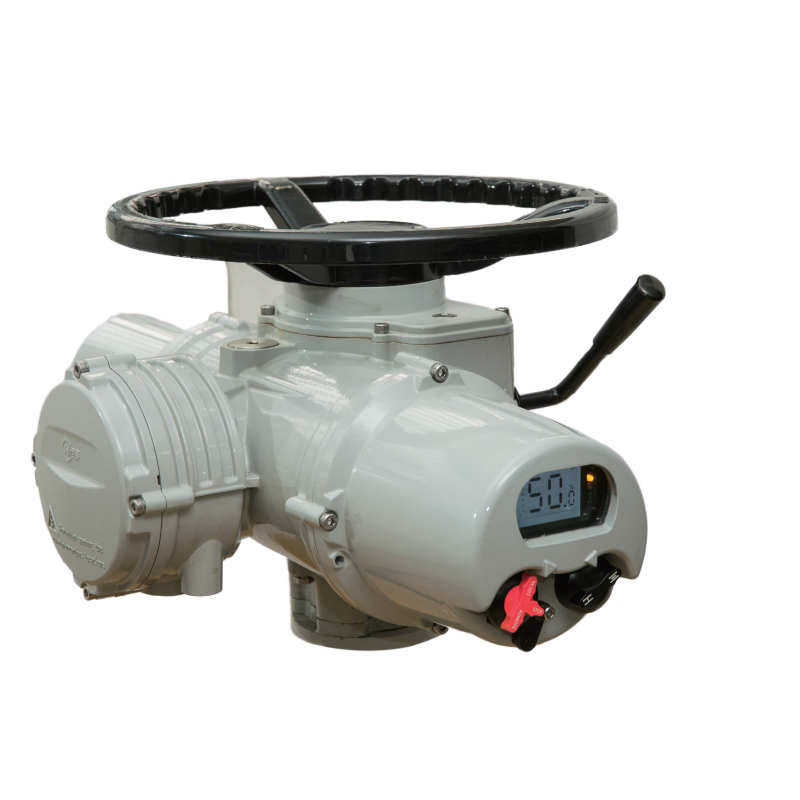
You do not install multi-rotational equipment on every pipeline component. You must pair them with specific linear-motion valve geometries. Understanding these target valve types prevents costly engineering mismatches.
Gate Valves: Use these primarily for high-pressure isolation. They provide unobstructed, full-bore flow when completely open. Actuating them requires significant force over many rotations.
Globe Valves: These devices excel at severe throttling. They allow operators to manage incremental flow accurately. They require sustained, precise rotational input to function correctly.
Needle and Diaphragm Valves: Choose these for extreme precision tasks. They perform flawlessly in contamination-sensitive fluid environments. Pharmaceutical and chemical plants rely heavily on this combination.
You must also carefully verify stem configurations during the specification phase. These automation units easily accommodate rising stem architectures. The hollow shaft makes this integration straightforward. However, they also connect securely to non-rising stem designs. In non-rising setups, the threaded component remains inside the valve body. The equipment simply provides rotational torque directly to the top nut.
Industries worldwide depend on this robust technology for high-stakes applications. In municipal water treatment facilities, they command massive sluice gates. They manage heavy sludge and high-volume water diversion safely. In power generation plants, they modulate high-temperature steam bypass valves. These extreme thermal environments demand flawless operation. Petrochemical pipelines use them to regulate volatile liquids securely. A mechanical failure in these sectors triggers severe environmental and safety consequences. Therefore, exact mechanical compatibility remains paramount.
Upgrading from manual handwheels or basic pneumatic systems unlocks several critical operational advantages. First, you achieve true surgical precision. These multi-rotational systems excel at modulating control. They execute microscopic adjustments in flow rate continuously. A human operator turning a heavy handwheel simply cannot match this exactness. Automated systems read central control signals and adjust the valve stem by millimeters.
Second, they actively eradicate the dangers of water hammer. When a standard quarter-turn valve closes too rapidly, it causes sudden fluid stoppage. This sudden deceleration creates a destructive hydraulic shock wave. This wave travels backward through the piping network. It routinely destroys pipe supports and ruptures mechanical seals. Gradual, multi-rotation closure prevents this physics problem entirely. The fluid decelerates smoothly over several minutes. This gentle operation protects your expensive infrastructure from internal damage.
Finally, we must highlight mechanical self-locking capabilities. Many of these units rely on internal worm gear configurations. A worm gear features an inherent friction angle. High-pressure fluids pushing against the valve gate cannot "back-drive" the actuator. Even if the entire facility loses electrical power, the valve remains perfectly locked in its last known position. The internal fluid pressure cannot force the valve open. This inherent fail-safe nature provides tremendous operational peace of mind.
Engineers frequently must choose between two distinct automation profiles. You must align your device selection with your specific pipeline geometry and required process speeds. We must evaluate this choice through a strictly objective lens.
The quarter-turn profile operates on a strict 90-degree motion path. It actuates very rapidly. These units routinely complete their full stroke in mere seconds. You deploy them for emergency shut-offs and basic fluid isolation. They pair exclusively with ball valves, plug valves, or butterfly valves. However, they offer exceptionally limited throttling precision. You cannot use them to fine-tune flow rates accurately.
Conversely, the multi-turn profile requires anywhere from 2 to 20 or more full rotations. Actuation happens much slower. Depending on the valve size, a full stroke might take several minutes. Manufacturers engineer them specifically for exact flow modulation. They manage extreme torque requirements seamlessly. As discussed, they pair exclusively with gate or globe valves.
Do not view one technology as inherently better than the other. Frame the choice entirely around alignment. Use the decision matrix below to clarify your engineering requirements.
Feature Matrix | Quarter-Turn Profile | Multi-Turn Profile |
|---|---|---|
Motion Range | Strictly 90 degrees | Multiple full rotations (often >360°) |
Actuation Speed | Rapid (Measured in seconds) | Gradual (Measured in minutes) |
Optimal Valve Geometry | Ball, Butterfly, Plug | Gate, Globe, Needle, Sluice |
Primary Engineering Goal | Emergency shut-off, fast isolation | Exact flow modulation, high torque |
Selecting the correct Electric valve Actuator requires rigorous engineering data. Guesswork inevitably leads to equipment failure. First, examine your baseline torque and thrust calculations. A standard direct-mount unit typically delivers anywhere between 30 and 1,000 Nm. However, massive municipal infrastructure demands substantially more force. By adding secondary reduction gearboxes, you can scale the final output dramatically. Some specialized multi-stage configurations generate up to 500 KNm of rotational torque.
You must also specify the correct physical connection standards. The mechanical interface between the unit and the valve bonnet matters immensely. Industry standards generally categorize these into three primary flange types. You will encounter the Torque type, the Power Station type, and the Thrust type. You must identify your existing valve top-works and specify the exact matching flange.
Environmental and safety certifications represent non-negotiable requirements. If you install units outdoors or in wash-down areas, demand robust ingress protection. Look specifically for NEMA 4X or IP67/IP68 ratings to prevent water and dust intrusion. If your plant contains combustible dust or volatile gas zones, standard enclosures pose a fire risk. You must secure explosion-proof enclosures. These specialized housings contain internal sparks safely, preventing catastrophic facility explosions.
Finally, evaluate the intelligent integration capabilities of the equipment. Modern fluid processing has moved far beyond basic on/off copper wiring. Today's facilities require smart modulating units. Look for models featuring external OLED diagnostics. These screens allow technicians to program limits without opening the housing. Ensure the unit supports modern fieldbus protocols. Modbus, Profibus, and Foundation Fieldbus allow the equipment to feed real-time diagnostic data directly into your central control system.
Even premium equipment fails rapidly if engineers implement it poorly. You must avoid several common engineering pitfalls to ensure system longevity and safety.
Duty Cycle Mismatches: You must never specify standard units for high-frequency modulating tasks. A basic isolation unit usually carries a 25% duty cycle rating. It needs time to cool down between operations. If you force it to run continuously at a 75% duty cycle, the motor will suffer severe thermal failure. You will burn out the stator windings rapidly. Always match the manufacturer's duty cycle rating to your actual daily process demands.
Torque Over-Specification: Many procurement managers mistakenly believe that bigger is always better. This assumption introduces severe mechanical hazards. Over-sizing an automated unit creates dangerous shear potential. If the electronic limit switches fail, a massive motor will just keep turning. It will easily shear a stainless steel valve stem in half. Alternatively, it can crush the internal valve seating completely. You must size the torque output precisely to your maximum differential pressure.
Retrofitting Manual Systems: Upgrading legacy manual valves hides numerous unexpected costs. You cannot simply bolt a new smart motor onto a 30-year-old rusty valve. You usually need precise flange machining to make the parts fit. You will also need custom-fabricated mounting brackets. Most importantly, you must evaluate the condition of the existing valve packing. Old, hardened graphite packing creates massive internal friction. Automating a highly stiff valve will strain your new motor instantly. Always rebuild the valve packing before applying automated torque.
Implementing a multi-turn electric valve actuator represents a foundational investment in facility safety. It dramatically upgrades your process precision and reliability. You eliminate the unpredictability of human error entirely. You actively prevent destructive hydraulic shocks within your piping infrastructure. Most importantly, you secure surgical, repeatable control over volatile fluid networks.
Before you contact vendors for quotes, you need to execute several actionable steps. Advise your engineering team to audit the plant's P&ID (Piping and Instrumentation Diagram) thoroughly. Verify the exact maximum differential pressure (MDP) across every targeted valve location. Once you gather this critical data, consult directly with trusted manufacturers. Demand validated torque requirement sheets tailored specifically to your exact valve geometries. Rigorous upfront preparation guarantees seamless installation and decades of reliable operation.
A: When properly specified and maintained, these units typically offer an operational lifecycle of 10 to 20 years. Lifespan depends heavily on strict adherence to the manufacturer's duty cycle ratings. Operating a unit beyond its thermal limits or neglecting routine gearbox lubrication will drastically reduce its functional longevity.
A: High-quality units include a declutchable manual handwheel for absolute safety. During a blackout, an operator pulls a mechanical lever to disengage the electric motor. They can then manually rotate the handwheel to open or close the valve. This ensures emergency mechanical overrides remain accessible without electrical power.
A: Worm gear designs provide inherent mechanical self-locking capabilities. They prevent high-pressure fluids from back-driving the valve, ensuring stable, high-torque positioning. Conversely, spur gear systems offer higher transmission efficiency and faster response times. However, spur gears usually require supplementary external brakes to hold their position against strong fluid pressure.


