
Views: 0 Author: Site Editor Publish Time: 2026-04-26 Origin: Site


The shift toward high-precision process control and SCADA integration makes electric actuation the standard for modern fluid management. You need exact control over complex piping networks. Industrial facilities increasingly rely on automation to manage flow rates safely. However, selecting the wrong device creates severe operational risks. It often leads to premature motor burnout or destructive water hammer effects. You might even face catastrophic failure in harsh environments if the enclosure fails.
We designed this technical evaluation framework to help you avoid these engineering failures. You will discover how to match the correct Electric valve Actuator to specific valve mechanics. We will show you how to calculate exact torque requirements safely. You will also learn to navigate strict environmental standards. This ensures your systems run reliably under heavy continuous loads.
Multi-turn vs. Part-turn: Multi-turn actuators handle long-stroke linear valves (gate/globe) via multi-rotational output, while part-turn actuators are restricted to 90°–270° motion for rotary valves (ball/butterfly).
Torque Redundancy is Critical: Engineering baselines require a 1.2x to 1.5x safety multiplier above the valve's maximum operating torque.
Environmental Compliance: Marine and hazardous applications demand strict adherence to NEMA 4X/7, IP68, and ATEX standards to prevent ingress and explosion risks.
Smart Integration: Modern continuous modulating actuators rely on closed-loop positioning and Partial Stroke Testing (PST) for predictive maintenance.
Engineers classify electric actuation systems based on their mechanical motion profiles. You must match the output rotation strictly to the internal mechanics of your valve. A mismatch prevents operation and damages the valve stem.
The international ISO 22153 standard defines the core capabilities of these devices. A Multi-turn Electric valve Actuator must transmit torque for at least one full revolution. It must also bear significant axial thrust generated during the stroke. They rotate multiple full 360-degree cycles. This motion opens and closes linear-action valves precisely.
Valve Compatibility: They are ideal for gate, globe, and diaphragm valves. These designs require multiple stem rotations to move the closure element from fully open to fully closed. You use them extensively in bulk water distribution and high-pressure steam lines.
Design Requirement: Gate valves often feature a rising stem. As the valve opens, the threaded stem moves upward. Therefore, a Multi-turn Electric Valve Actuator often utilizes a hollow output shaft. This hollow core accommodates the rising stem securely. It prevents mechanical interference as the valve completes its long stroke.
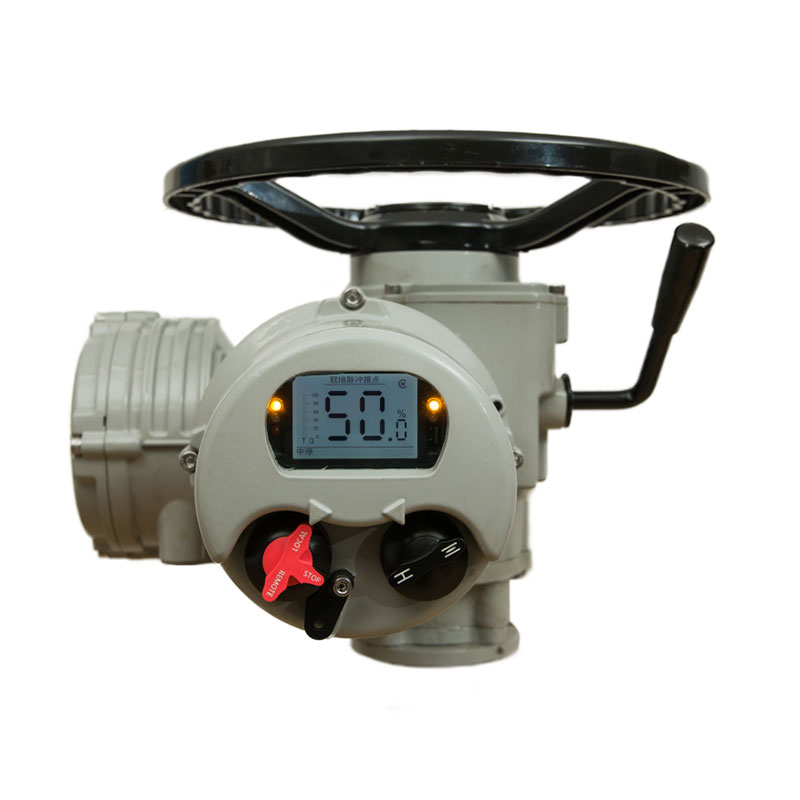
Unlike their multi-turn counterparts, part-turn devices have a strictly constrained operational range. They typically rotate 90 degrees, known as quarter-turn actuation. Some specialized units can reach up to 270 degrees. They do not complete full continuous revolutions.
Valve Compatibility: You pair a Part-turn Electric Valve Actuator with rotary valves. Common examples include ball, butterfly, and plug valves. These valves require just a simple 90-degree pivot to fully block or permit flow.
Footprint: They are generally more compact than multi-turn alternatives. They require far less overhead clearance. This makes them perfect for tight piping galleries. You will often see them clustered in dense manifold arrangements.
Comparison Chart: Actuator Types
Feature | Multi-Turn Actuators | Part-Turn Actuators |
|---|---|---|
Motion Profile | Continuous 360° revolutions | Limited arc (90° to 270°) |
Valve Compatibility | Gate, Globe, Diaphragm | Ball, Butterfly, Plug |
Axial Thrust Support | High (bears thrust directly) | Low (valve body bears thrust) |
Space Requirement | Requires high vertical clearance | Compact, low overhead clearance |
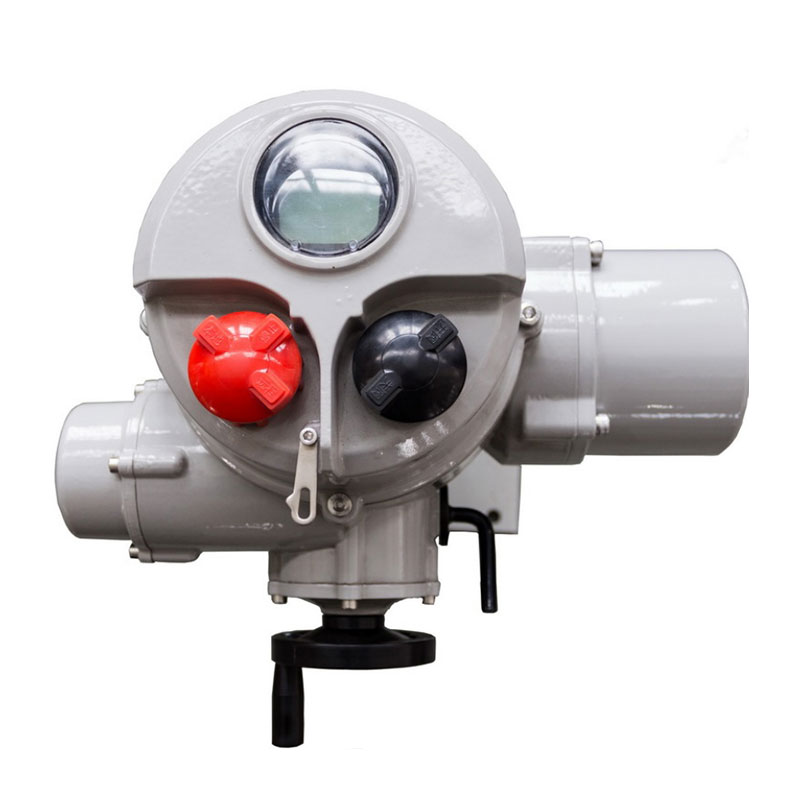
Selecting the correct physical size involves complex engineering math. You cannot simply guess the required force. An undersized unit will stall and overheat. An oversized unit wastes space and threatens to snap the valve stem.
You must evaluate force across three distinct stages of the valve's motion. A single baseline figure is never enough for safe engineering.
Break Torque: This is the high initial force required to unseat a valve. Friction and pressure differentials lock the valve in place. The required force peaks dramatically here, especially after prolonged inactivity.
Running Torque: This is the continuous force required to maintain motion through the stroke. It remains relatively stable once the valve breaks free. It overcomes dynamic fluid resistance and packing friction.
Seating Torque: This is the final force needed to achieve a leak-tight seal. The actuator must push the closure element firmly into its seat. This prevents high-pressure media from leaking past the seal.
Safety Factor Rule: You must apply a strict engineering multiplier. Specify an actuator output torque 1.2 to 1.5 times the valve's maximum torque requirement. This safety factor compensates for eventual internal wear, media buildup, and minor pressure spikes.
Electric motors generate intense heat during operation. You must classify how often the motor runs. The ISO 22153 standard categorizes operating regimes into four strict classes.
Class A (Open/Close Duty): This is standard on/off isolation. The unit moves from fully open to fully closed. It rests for long periods between cycles.
Class B (Inching/Positioning): You use this for occasional adjustments to intermediate positions. The motor runs slightly more frequently but still requires cooling time.
Class C (Modulating Duty): This class handles frequent adjustments for process control. The motor starts and stops constantly to maintain specific flow rates.
Class D (Continuous Modulating): This involves constant dynamic control. The motor practically never stops adjusting. It requires exceptional thermal management and specialized brushless DC motors.
Common Mistake: Over-specifying this class increases bulk and power draw unnecessarily. Under-specifying leads to immediate thermal overload. If you put a Class A unit into a Class C application, the motor will burn out in days.
Standard industrial units fail quickly in corrosive or explosive environments. You must upgrade your hardware when moving to coastal or offshore installations. Saltwater, constant vibration, and extreme temperatures demand specialized engineering.
You will find these rugged units on shipboard manifolds, offshore rigs, and coastal desalination plants. They require high durability against salt fog and relentless engine vibration. Furthermore, a Marine Electric Valve Actuator must survive extreme temperature fluctuations. Many rated units operate safely down to -60°C in arctic offshore environments.
You cannot compromise on the external housing. The internal electronics remain highly sensitive to moisture and gas.
Ingress Protection: You must demand an IP68 baseline. They utilize robust double-sealed enclosures. This protects internal terminal compartments even during temporary terminal cover removal.
Hazardous Areas: Offshore platforms process flammable hydrocarbons. You need NEMA 7 or ATEX certification (e.g., Exd II CT5 Gb). These thick enclosures contain any internal electrical spark. They prevent the spark from igniting the combustible gases outside.
Corrosion Resistance: Standard paint blisters and peels near saltwater. Marine units use specialized multi-layer powder coatings. Many upgrade entirely to highly durable marine-grade alloys, like hard-anodized aluminum or 316 stainless steel.
Total vessel power loss is a severe reality at sea. You must maintain control of critical cooling and ballast systems. Marine settings necessitate mechanical manual overrides. You engage large handwheels to manually crank the valve closed. They also feature mechanical position indicators. These dials show the exact valve position without requiring any electrical power.
Modern fluid control has evolved past simple mechanical switches. Today, microprocessors and sensors sit inside the actuator housing. They turn valves into active data nodes within your facility network.
Older systems utilized open-loop command. A central computer sent a blind command to open, hoping the valve complied. We now transition to closed-loop systems. They use integrated digital positioners for real-time error correction. The motor reads its exact physical position via magnetic encoders. It feeds this data back instantly. If it falls short of the target, the microprocessor automatically bumps the motor to correct the error.
You no longer wait for a valve to jam before fixing it. Smart logic boards provide active health monitoring.
Data Logging: The system records torque profiling over time. It notices if the required break torque increases by 10% over six months. This data detects valve stem wear or mineral buildup before catastrophic failure occurs.
Partial Stroke Testing (PST): Emergency shutdown valves sit idle for years. You must know they will work during a crisis. PST capabilities slightly move the valve (e.g., 10%) and return it. This verifies the mechanical availability of the valve without halting the active industrial process.
You must connect these smart devices to your master control room. They feature integration readiness with SCADA, PLC, or BMS systems. They support modern two-wire protocols like HART, Profibus, or Modbus. This eliminates massive bundles of analog wiring, reducing installation complexity significantly.
Even the highest-quality hardware fails if installed poorly. Your engineering team must account for fluid dynamics and physical clearances before bolting the unit down.
Actuating a valve too quickly in a high-pressure liquid system causes destructive pressure spikes. The sudden stop sends a shockwave back through the rigid pipes. This phenomenon is water hammer. It shatters pipe supports and blows out gaskets. Actuation time (travel speed) must be calculated and strictly limited. You deliberately slow down the motor speed using internal gearboxes or variable frequency drives.
You must verify the physical dimensions. A mismatch here ruins the installation day.
Hollow Shaft Sizing: For multi-turn systems with rising stems, measure the valve stem carefully. The actuator's hollow shaft internal diameter must strictly exceed the valve stem's outer diameter. If the stem is too thick, it will hit the housing and jam.
Stroke Calculation: You need precise math to program the electronic limit switches accurately. Utilize standard calculations. Use the formula M = H / ZS. In this formula, M represents total turns required. H is the opening height of the valve. S is the thread pitch. Z represents the stem thread heads. This exact number tells the internal counter when to cut power.
Electric motors require routine physical care. Multi-turn systems typically require an initial inspection at 6 months. During this check, you verify bolt torque and check for unusual vibrations. This is followed by strict annual reviews. You must recalibrate the limit switches and apply fresh lubrication to the output base thrust bearings. If you neglect the grease, the thrust bearings will eventually seize under load.
Validating the correct electric valve actuator requires aligning mechanical motion, engineering parameters, and environmental realities. You cannot treat these devices as simple generic commodities. Their performance dictates the safety and efficiency of your entire piping network.
Align Motion: Always match multi-turn units to linear valves and part-turn units to rotary valves.
Shortlisting Logic: Begin with valve type and stroke length. Apply the 1.5x torque safety factor immediately. Determine the ISO duty class based on your process needs.
Layer Protections: Add necessary environmental protections, such as IP68 and ATEX marine-grade coatings, if you operate in harsh conditions.
Next Steps: Consult your facility flow data sheets. Conduct a comprehensive site survey of the physical installation space. Verify clearance limits and available power drops before finalizing procurement.
A: Multi-turn actuators rotate multiple full 360-degree cycles to open or close linear valves, like gate and globe valves. Part-turn actuators operate within a strictly limited arc, usually 90 degrees. You use part-turn models exclusively for rotary valves, like ball and butterfly valves.
A: First, calculate the valve's maximum operating torque. You must factor in both internal media pressure and mechanical friction. Next, multiply that baseline figure by a safety factor of 1.2 to 1.5. This ensures the actuator output safely handles unexpected pressure spikes or mineral buildup.
A: Marine actuators feature specialized anti-corrosion coatings to survive salt fog. They require IP68 water ingress protection to handle total submersion. They utilize vibration-resistant electronics. Furthermore, they often require strict explosion-proof certifications (ATEX) to guarantee safety on combustible offshore platforms.
A: Electric motors generate significant internal heat. Actuators rated below a 100% duty cycle require strict cooling periods between operations. Selecting the wrong duty class, like using a Class A unit for continuous modulation, triggers thermal overload protection immediately. This causes unexpected system downtime and damages the motor coils.


