
Author: Site Editor Publish Time: 2026-02-09 Origin: Site
Selecting the wrong actuation component is a costly mistake that often goes unnoticed until production lines stall. Improper selection leads to premature motor burnout, structural buckling under load, or gross over-specification that unnecessarily drives up Bill of Materials (BOM) costs. While the basic concept seems simple—converting rotational motion into linear motion—the engineering reality is complex.
How to choose the right linear actuator? It requires moving beyond simple "push and pull" metrics. It involves a multi-dimensional trade-off between speed, duty cycle, precision, and environmental resistance. Engineers must navigate the delicate balance between static holding power and dynamic thrust while accounting for thermal dissipation.
This guide moves beyond hobbyist advice regarding 12V setups. We focus on rigorous engineering evaluation for industrial and professional applications. We will explore the physics, drive technologies, and strategic sourcing decisions necessary to integrate the optimal electric linear actuator into your automation system.
Physics First: Selection begins with calculating the "Critical Speed" and "Buckling Force," not just reading the peak force rating on a datasheet.
Drive Tech Matters: The difference between a lead screw and a ball screw defines the lifespan, efficiency, and back-drive risks of the system.
Duty Cycle is the Limiting Factor: Thermal management often dictates the motor choice before force requirements do.
TCO over Unit Cost: Higher upfront costs for integrated servo actuators often lower long-term costs compared to pneumatic maintenance or lower-grade DC motor replacements.
Buy vs. Build: Unless production volume exceeds hundreds of units annually, purchasing integrated actuators is statistically more cost-effective than DIY assembly.
Before browsing a catalog, you must establish the hard physical constraints of your application. These constraints typically disqualify 80% of market options immediately. A common error is selecting an actuator based solely on its peak force rating, ignoring the nuances of how that force is applied over time and distance.
Understanding the difference between the force required to hold a load and the force required to move it is critical. Static load refers to the actuator’s ability to hold a position when power is off or the motor is holding torque. Dynamic load is the force capacity while the rod is extending or retracting.
For example, a ball screw actuator may move a 1,000 lbs load easily (dynamic) but, due to high efficiency and low friction, might back-drive under that same weight when power is cut (static instability). Conversely, an Acme screw might hold that load indefinitely but struggle to move it efficiently.
The Safety Factor: Engineering best practices recommend using a safety margin of 1.5× to 2× on force ratings.For example, if your application requires 500 N of force, choose an actuator rated at least 750 N to 1000 N.
This extra margin helps account for:
Friction spikes in the guided mechanics.
Age-related wear that increases system drag.
Unexpected shock loads during operation.
Force and speed generally share an inverse relationship in electromechanical systems. High force typically requires high gear reduction, which sacrifices speed. If you need both high speed and high force, the power requirement (and physical size of the motor) increases drastically.
Critical Speed (Whirling): In long-stroke applications, you cannot simply increase RPM to get more speed. There is a physical limit called "Critical Speed," where the screw shaft begins to vibrate violently due to natural resonance. If you exceed this limit, the system will self-destruct. Consequently, as stroke length increases, the maximum allowable speed decreases.
Extended stroke lengths drastically reduce the compressive load capacity of the actuator rod. This is governed by Euler’s Column Formula. As the actuator rod extends, it acts like a long column. If the compressive load exceeds the column strength, the rod will bow or buckle, permanently damaging the unit.
To mitigate this, manufacturers may increase the diameter of the rod or the lead screw for longer strokes. However, this adds weight and inertia. Always verify the "Buckling Force" chart provided by the manufacturer rather than assuming the actuator can push its full rated load at full extension.
Side-Loading Warning: Electric actuators are designed strictly for axial (push/pull) force. They are not structural members. Any side load—force applied perpendicular to the rod—will destroy the front seal and bend the rod. Applications with side loads must use external linear rails or guides to carry the weight, leaving the actuator to handle only the thrust.
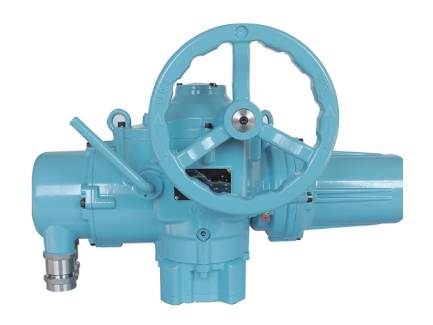
The heart of any linear motion system is the mechanism that converts rotary energy into linear movement. What are the four types of linear actuators? Generally, they are categorized by their drive mechanism: Lead Screw, Ball Screw, Planetary Roller Screw, and Belt Drive. Selecting the wrong type is the most common reason for dissatisfaction with lifespan or precision.
| Drive Technology | Efficiency | Duty Cycle Suitability | Primary Advantage | Primary Disadvantage |
|---|---|---|---|---|
| Lead Screw (Acme) | 20% - 40% | Low (Intermittent) | Self-locking, Low Cost, Quiet | High friction, Generates Heat, Wear |
| Ball Screw | 90% - 95% | High (Continuous) | High Thrust, High Precision, Efficient | Back-drives (needs brake), Higher Cost |
| Planetary Roller Screw | > 90% | Extreme (Heavy Duty) | Highest Force Density, Long Life | Very Expensive, Heavy |
| Belt Drive | High | High (High Speed) | Speed (>50 in/s), Long Stroke | Lower repeatability, Stretching |
Lead screws rely on sliding friction between a nut (often plastic or bronze) and a screw. They are best for low duty cycle applications or vertical adjustments where the load must stay in place without power (self-locking). The trade-off is efficiency; because so much energy is lost to friction, they generate significant heat and are not suitable for constant motion.
Ball screws replace sliding friction with rolling friction using recirculating ball bearings. They are best for high precision, heavy loads, and continuous operation. Because they are highly efficient (>90%), they generate little heat. However, this efficiency means they are back-drivable; a vertical load will cause the screw to spin and the load to drop if power is lost, necessitating a brake.
Often used as a replacement for hydraulic cylinders, roller screws offer extreme force density. Multiple threaded rollers surround the main screw, providing a massive contact surface area. They offer lifespans potentially exceeding 20 years in heavy industrial settings but carry the highest price tag.
When speed is the priority, belt drives are the answer. They can achieve speeds exceeding 50 inches per second, which would cause a screw drive to "whip." They are excellent for long-stroke transport applications. The trade-off is lower repeatability compared to screws and potential issues with "reflected inertia" mismatch in high-dynamic applications.
Once the mechanics are defined, you must align the power source and intelligence with the application needs. The choice of motor dictates the control architecture and the system's ability to handle thermal stress.
Brushed DC (12V/24V): These are simple engines where reversing polarity reverses direction. They are ideal for intermittent mobile applications like agricultural trucks or solar trackers. However, the brushes wear out over time, and they generate sparks, making them unsuitable for hazardous environments.
Brushless DC (BLDC) / Servo: Required for 100% duty cycle and high-speed precision. BLDC motors eliminate physical brushes, reducing maintenance and increasing lifespan. They are essential for applications requiring precise speed control and positioning, effectively eliminating the "stick-slip" issues common in pneumatic valves.
Stepper Motors: These offer open-loop precision, making them cost-effective for low-speed positioning. However, under high torque or resonance, steppers risk "missing steps," which leads to position errors unless closed-loop feedback is added.
Duty cycle is perhaps the most overlooked specification. It is defined as:
Duty Cycle % = (On Time) / (On Time + Off Time)
If an actuator runs for 10 seconds and rests for 90 seconds, it operates at a 10% duty cycle. Ignoring thermal dissipation leads to insulation failure and seized motors. A "Heat First" selection method is recommended for high-cycle applications: select the actuator based on its ability to dissipate heat (often a larger frame size or active cooling) before selecting for force.
Modern automation requires data. Selecting the right position feedback is crucial:
Potentiometers: Analog, absolute position, moderate accuracy. Good for simple adjustments.
Hall Effect Sensors: Digital pulses, relative position. Good for speed control and counting rotations.
Encoders (Optical/Magnetic): High precision. Necessary for complex motion profiles.
There is a strong trend toward "Smart Actuators" with integrated onboard controllers. These integrated units simplify panel wiring and enable direct communication with PLCs via CAN bus or Modbus, allowing for real-time diagnostics.
An actuator might work perfectly on a test bench but fail within a week in a washdown environment. What factors need to be considered for choosing actuators? Beyond force and speed, the operating environment determines the materials and sealing required.
The IP rating consists of two digits: the first for solids (dust) and the second for liquids.
IP54: Standard protection. Good for indoor automation where dust is present but water is not.
IP66/IP69K: Essential for outdoor use, agricultural machinery, or food processing facilities requiring high-pressure washdowns.
Corrosion resistance is equally vital. In marine or food processing environments, standard aluminum housings will oxidize. Stainless steel rods and epoxy-coated housings are necessary investments to prevent seal failure caused by pitted surfaces.
Temperature extremes affect performance. Cold thickens the lubricating grease, causing sluggish performance and higher amp draw, which can trip over-current protection. Excessive heat degrades the duty cycle rating. Manufacturers often provide temperature derating curves that must be consulted if the ambient temperature exceeds 40°C.
When justifying the cost, look at the TCO. While electric systems often have a higher upfront cost than pneumatic cylinders, the operational savings are significant.
Energy Efficiency: Electric actuators operate at ~80% efficiency, whereas pneumatic systems often operate at ~15% efficiency due to compressor leaks and the energy cost of compressing air.
Maintenance Reduction: Electric systems eliminate air leaks, filter changes, and oil contamination risks.
Life Expectancy: For ball screws, you can calculate the B10 life (the point at which 10% of units will fail due to fatigue). This allows for predictive maintenance, avoiding costly unplanned downtime.
The final step in the selection process involves procurement strategy. Engineers often debate whether to build a custom solution or buy an integrated unit.
Buying a motor, a lead screw, a coupling, and bearings separately to build a custom actuator is often a false economy. This "DIY" approach introduces hidden costs:
Assembly Labor: Hours spent machining mounts and aligning shafts.
Alignment Issues: Slight misalignments lead to vibration and premature wear.
Component Matching: Matching motor inertia to screw inertia is difficult without specialized engineering software.
Unless your production volume exceeds hundreds of units annually, purchasing integrated actuators is statistically more cost-effective. It transfers the liability of performance and warranty to the vendor.
Not all suppliers are created equal. When vetting an electric actuators manufacturer, look beyond the catalog price. Ask the following:
Customization Capabilities: Can they modify stroke length, cable types, or mounting points (Clevis vs. Trunnion) to fit your machine?
Validation Testing: Does the manufacturer provide authentic test data for static load, salt spray (corrosion), and thermal profiling?
Supply Chain: For MRO (Maintenance, Repair, and Operations), lead times matter. A cheaper overseas drop-shipper may leave your machine down for weeks waiting for a replacement part.
Many users ask Who makes the best linear actuators?, but the answer depends on the application category. A manufacturer specializing in medical micro-actuators will not be the best choice for heavy-duty construction equipment. Look for a partner with specific experience in your industry vertical.
Selecting the best actuator is a structured process, not a guess. The framework flows logically: define the load and stroke, calculate the physics (checking for buckling and critical speed), select the appropriate drive type, match the motor and control architecture, and finally verify environmental suitability. By following this path, you avoid the high cost of mismatch.
The value of precision cannot be overstated. Oversizing an actuator "just to be safe" adds weight, cost, and energy consumption. Precise selection yields the best efficiency and longevity. We encourage you to consult with application engineers to run life-cycle simulations before finalizing your Purchase Order.
A: Dynamic load is the force the actuator can push or pull while the rod is moving. Static load is the maximum force the actuator can withstand while holding a fixed position (not moving). Static capacity is typically higher than dynamic capacity. It is crucial to check both, especially for applications where the actuator holds a heavy weight in place when powered off.
A: Yes, this is increasingly common due to the risk of oil leaks in hydraulic systems. High-force electric actuators, particularly those using planetary roller screws or heavy-duty ball screws, can match the force density of hydraulics. While the electric unit is larger and has a higher upfront cost, it offers better precision, lower energy costs, and zero maintenance relative to hydraulic fluids.
A: Noise and vibration often indicate resonance or alignment issues. If the actuator operates near its "Critical Speed," the screw shaft will whip or vibrate. Other causes include side-loading (bending the rod), lack of lubrication, or worn internal bearings. If the noise is grinding, the internal gears or screw nut may be failing.
A: The four main drive technologies are Lead Screw (Acme), Ball Screw, Planetary Roller Screw, and Belt Drive. Lead screws are cheap and self-locking but inefficient. Ball screws are efficient and precise but back-drivable. Roller screws are extremely durable for heavy loads. Belt drives are designed for high-speed, long-stroke applications.


