
Author: Site Editor Publish Time: 2026-05-07 Origin: Site


If you work in industrial automation, oil & gas, water treatment, or process engineering, you've likely encountered part-turn electric actuators. These compact electromechanical devices are the workhorses behind automated ball valves, butterfly valves, and plug valves — controlling the flow of liquids, gases, and steam across thousands of industrial applications worldwide.
In this guide, we break down exactly what a part-turn electric actuator is, how it works inside, what specifications matter most, and how to select the right one for your valve. Whether you're an engineer specifying equipment for a new project or a maintenance professional looking to understand your existing systems, this article covers everything you need to know.
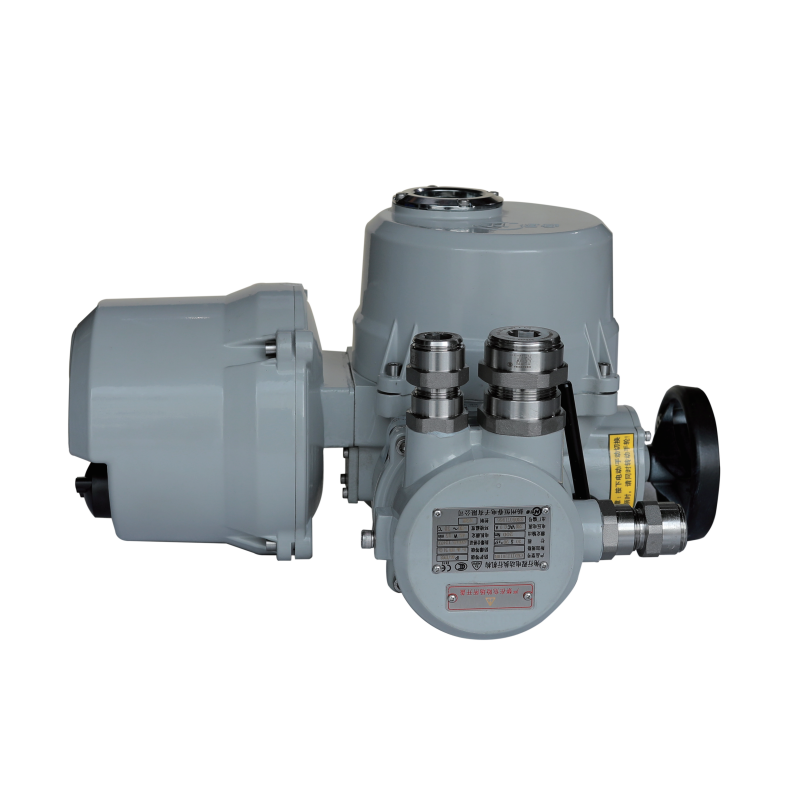
Part-Turn Electric Actuator: Definition
A part-turn electric actuator (also called a quarter-turn electric actuator or angular stroke electric actuator) is a device that converts electrical energy into limited rotary motion — typically 0° to 90° — to operate quarter-turn valves. Unlike manual handwheels or pneumatic actuators, electric actuators use an integrated motor and gear train to precisely position the valve stem.
These actuators are mounted directly onto the valve via an ISO 5211 standard flange, making installation straightforward. They receive electrical control signals (either simple open/close commands or analog 4–20mA positioning signals) and drive the valve to the desired position, while providing feedback on valve status to the control system.
Terminology note: "Part-turn," "quarter-turn," and "angular stroke" all refer to the same category of actuator. The most common search term is "part-turn electric actuator" or "quarter turn electric valve actuator."How Does a Part-Turn Actuator Work?
Inside a part-turn electric actuator, four core components work together:
1. Electric Motor
A totally enclosed AC squirrel-cage motor (or DC motor in some compact models) provides the rotational power. Motors are rated for specific duty cycles — S2 for on-off service (short bursts) and S4/S5 for modulating service (frequent starts and stops).
2. Gear Reduction Train
The motor's high-speed, low-torque output is reduced through a worm gear (typically bronze alloy worm gear + alloy steel worm) to produce high torque at low speed. This gear train is also self-locking, meaning the valve cannot be back-driven by line pressure when the motor is off — a critical safety feature.
3. Control Unit
A microprocessor-based control board manages motor direction, position feedback, torque limiting, and fault diagnostics. Advanced "intelligent" actuators support non-intrusive infrared configuration, allowing technicians to set parameters without opening the enclosure — essential in hazardous areas.
4. Position Feedback
Potentiometers, encoders, or Hall-effect sensors track the output shaft angle and send a position signal (4–20mA or digital) back to the DCS/PLC, confirming the valve's actual position.
The complete cycle in 3 steps: Control signal arrives → Motor drives gear train → Output shaft rotates valve to target position and feedback is sent.Part-Turn vs. Multi-Turn Actuators: What's the Difference?
Choosing between part-turn and multi-turn actuators depends entirely on your valve type:
Feature | Part-Turn Actuator | Multi-Turn Actuator |
Rotation | 0–90° (up to 300° optional) 0–90° | Multiple full 360° rotations |
Valve types | Ball, butterfly, plug, damper | Gate, globe, sluice gate, knife gate |
Stem motion | Rotary only | Rotary + linear (rising stem) |
Typical torque | 40–2,000+ N·m | 50–10,000+ N·m |
Mounting | ISO 5211 direct mount | ISO 5210, often with gearbox |
Speed | Fast (5–60 seconds typical) | Slower (multiple rotations needed) |
Key Specifications Explained
When evaluating part-turn electric actuators, pay close attention to these specifications:Output Torque
Measured in Newton-meters (N·m) or foot-pounds (ft-lb), this is the rotational force the actuator can deliver. It must exceed the valve's required operating torque by a safety margin of 25–50% to account for wear, temperature effects, and unexpected line conditions.
Rotation Angle
Standard part-turn actuators provide 90° of rotation. Some models offer adjustable travel stops, and special versions can deliver up to 300° for valves requiring more than a quarter turn.
Duty Cycle
This defines how often the motor can run without overheating:
S2 (short-time duty): For on/off applications, rated for 15 minutes of continuous operation.
S4 (intermittent duty): For periodic starting with moderate frequency.
S5 (continuous duty): For frequent modulating service, up to 1,200 starts per hour.
Protection Rating (IP Code)
Industrial actuators typically offer IP67 or IP68 protection — dust-tight and submersible. For outdoor or wash-down environments, IP68 is strongly recommended.
Explosion-Proof Rating
For hazardous areas, look for certifications such as ATEX Ex d IIB T4 Gb or IECEx. These ensure the actuator can contain an internal explosion without igniting the surrounding atmosphere.
Control & Communication
Modern actuators support multiple control methods:
Hardwired: Open/close/stop via discrete signals (simplest, most reliable).
Analog: 4–20mA for modulating position control and feedback.
Fieldbus: Modbus RTU/TCP, Profibus-DP, Foundation Fieldbus (FF), HART for digital integration with DCS/PLC.
Core Features to Look For
Feature | Why It Matters |
Non-intrusive setup | Infrared remote configuration without opening the cover — safe for explosive zones and reduces moisture ingress. |
Manual override | Handwheel with auto-clutch allows manual operation during power loss or maintenance. |
Torque sensing | Detects valve obstructions and stops the motor to prevent damage to valve or actuator. |
Double-sealed housing | Control compartment isolated from terminal chamber protects electronics from moisture and corrosion. |
Lifetime lubrication | Sealed gear train with permanent lubricant eliminates periodic maintenance. |
Local control knob | Tool-free Local/Remote/Stop selector and jog buttons for on-site commissioning. |
Fault diagnostics | LED display or digital interface shows error codes (overtorque, motor thermal, position sensor fault) |
Wide temperature range | Standard -30°C to +70°C; extended options for -50°C (Siberia) or +150°C (high-temp split type). |
Industrial Applications
Part-turn electric actuators are found wherever quarter-turn valves need automation:
Oil & Gas and Petrochemical
Ball valves and butterfly valves on crude oil pipelines, refinery distillation units, LPG storage terminals, and natural gas distribution networks. Explosion-proof models are standard here.
Power Generation
Boiler feedwater isolation, steam line control, flue gas desulfurization (FGD) dampers, and cooling water systems in thermal, combined-cycle, and nuclear plants.
Water & Wastewater Treatment
Butterfly valves for raw water intake, aeration basin flow control, chemical dosing valves, and sludge isolation. IP68 housing handles submersible and wash-down conditions.
Metallurgy & Steel
Damper control for blast furnace air systems, cooling water circuits, and dust extraction gas lines.
Municipal & HVAC
District heating network valves, city gas distribution, building HVAC dampers, and water conservancy sluice gates.
Chemical Processing
Corrosion-resistant actuators on reactor feed valves, solvent transfer lines, and acid/alkali handling systems.
How to Select the Right Part-Turn Electric Actuator
Follow this step-by-step process:
Identify your valve type and size. Ball, butterfly, or plug valve? What is the nominal diameter (DN) and pressure class (PN/ANSI)?
Calculate required torque. Obtain the valve manufacturer's torque data for your operating pressure and media. Add 25–50% safety margin.
Determine duty type. Simple open/close → S2 on-off type. Frequent modulation → S4/S5 regulating type.
Define control requirements. Hardwired only? 4–20mA analog? Fieldbus (Modbus/Profibus/HART)? Do you need position feedback?
Assess the environment. Standard indoor? Outdoor (IP68)? Hazardous area (ATEX/IECEx)? Extreme temperatures?
Check power supply. AC 220V single-phase? AC 380V three-phase? DC 24V? Ensure the actuator matches your available power.
Verify mounting interface. ISO 5211 flange is standard, but confirm the specific F-series size (F03–F25) matches your valve.
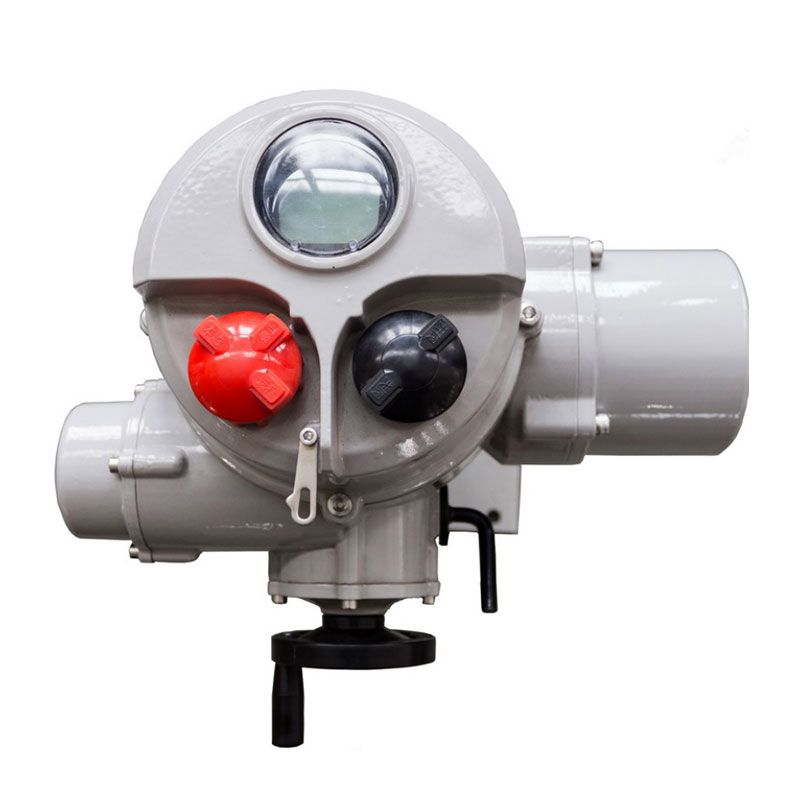
A: Key components include the electric motor, gear mechanism, control unit, and position indicators.
A: Consider factors like torque requirements, valve type, and environmental conditions when selecting an actuator.
A: These actuators are generally maintenance-free for over 30,000 operations, but regular inspections are recommended.
A: Yes, many part-turn actuators have an IP68 rating, making them suitable for outdoor and harsh environments.
A: Ensure the actuator has relevant safety certifications like CE and ATEX, and follow installation guidelines to prevent hazards.


