
Author: Site Editor Publish Time: 2026-09-04 Origin: Site


Multi-turn and part-turn actuators are both used to automate industrial valves, but they are designed for very different types of movement.
A multi-turn actuator rotates through multiple complete revolutions and is commonly used for valves that require long rotational travel, such as gate valves and globe valves. A part-turn actuator, sometimes called a quarter-turn actuator, rotates through a limited angle—typically around 90 degrees—and is commonly used for ball valves, butterfly valves, and plug valves.
The simplest distinction is:
Multi-turn actuator = multiple shaft revolutions
Part-turn actuator = limited-angle rotation
That difference affects almost every part of actuator selection, including valve compatibility, torque, travel, response speed, gearbox design, control strategy, and installation.
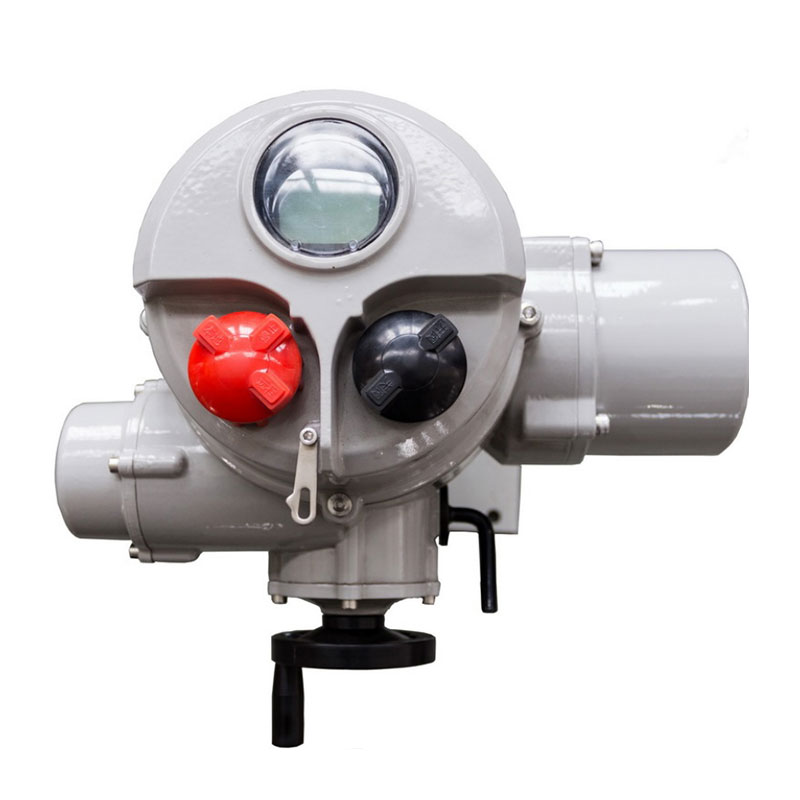
Hengchun currently manufactures both Multi-turn Electric Actuators and Part-turn Electric Actuators for industrial valve automation. Its multi-turn products are intended for valves requiring multiple revolutions, while its part-turn range is designed for limited-angle valve movement such as 0–90° or, on applicable designs, extended angular travel.
A multi-turn actuator is an electromechanical device whose output shaft rotates through more than one full revolution.
This type of actuator is designed for valves where the stem must rotate repeatedly before the valve reaches its fully open or fully closed position.
Typical examples include:
gate valves,
globe valves,
sluice gates,
and other rising-stem or multi-revolution valve systems.
The actuator motor transfers power through a reduction mechanism to produce controlled rotational torque. As the output shaft turns, the valve stem moves through its required travel.
Hengchun describes its multi-turn electric actuator range as suitable for gate valves, globe valves, and sluice gates, particularly in applications requiring high thrust and long travel. Its current CKD-related multi-turn products include direct-drive torque ranges from about 40 N·m to 3,000 N·m, with substantially higher output possible when used with suitable gearboxes.
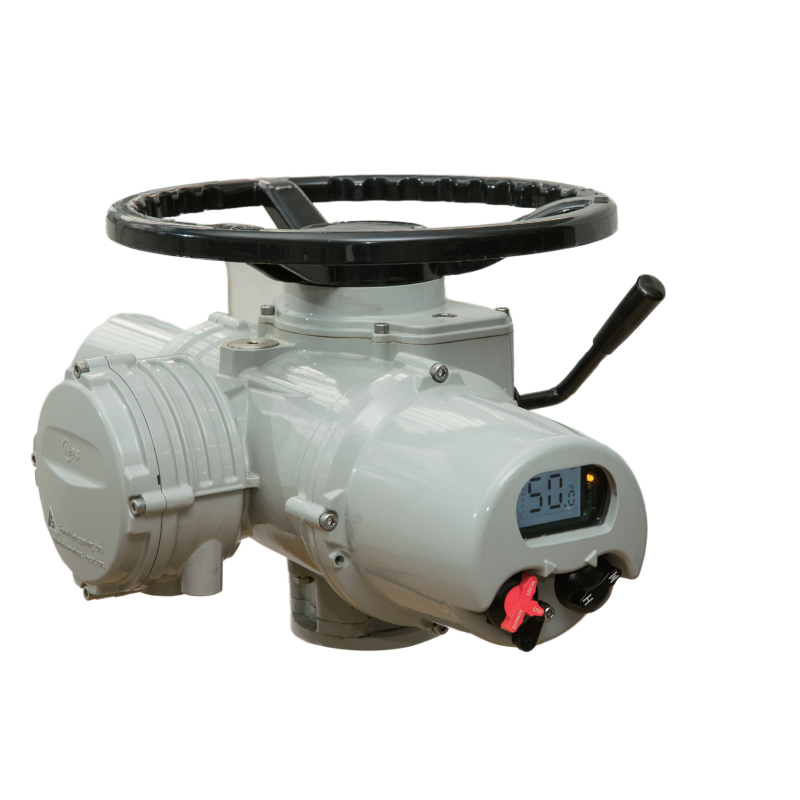
A part-turn actuator rotates through a limited angle rather than through multiple complete revolutions.
Most industrial quarter-turn valve applications require approximately:
0° → 90°
although some actuator configurations can support wider angular travel.
This type of movement is well suited to valves that move between open and closed positions through a short rotary stroke.
Typical examples include:
ball valves,
butterfly valves,
plug valves,
dampers,
and other quarter-turn flow-control devices.
Hengchun's current part-turn range is designed for applications such as ball valves, butterfly valves, and plug valves, with typical movement of 0–90° and certain configurations supporting broader angular movement. The company also lists on-off control, proportional regulation, and bus communication among the control functions available on applicable part-turn products.
Feature | Multi-Turn Actuator | Part-Turn Actuator |
|---|---|---|
Output motion | Multiple full revolutions | Limited-angle rotation |
Typical travel | Several or many turns | Usually around 90° |
Common valve types | Gate, globe, sluice gate | Ball, butterfly, plug |
Main output requirement | Torque and often thrust | Rotary torque |
Travel length | Longer | Shorter |
Typical operating speed | Generally longer full-stroke time | Generally faster open/close movement |
Valve movement | Repeated stem rotation | Quarter-turn or limited angular movement |
Typical applications | Long-travel isolation and regulating valves | Fast isolation and rotary regulation |
Control options | On-off, modulating, intelligent control | On-off, modulating, intelligent control |
Installation focus | Stem travel, number of turns, thrust | Rotation angle, torque, flange alignment |
The table gives a useful first comparison, but valve type and operating conditions still determine the correct actuator.
The most important selection question is not:
Which actuator is more powerful?
It is:
How does the valve physically move?
A gate valve may require the stem to rotate many times before the gate travels from fully closed to fully open. This makes a multi-turn actuator the natural choice.
A ball valve, by contrast, typically moves from closed to open with approximately one quarter of a revolution. Using a multi-turn actuator directly for this application would normally add unnecessary rotational travel unless a gearbox or other drive arrangement is specifically designed for it.
The actuator should therefore match the mechanical movement of the valve before other specifications are considered.
Gate valves operate by raising or lowering a gate through the flow path.
In many designs, the valve stem must rotate several times to move the gate through its full stroke.
That means the actuator needs to deliver controlled torque over repeated revolutions.
Depending on the valve, the actuator may also need to generate substantial axial thrust as the stem moves.
For large pipelines, power plants, water networks, and industrial isolation systems, this combination of multiple revolutions and high mechanical load makes the Multi-turn Electric Actuator a common solution.
Hengchun's multi-turn product range is specifically positioned for gate valves, globe valves, and sluice-gate applications in sectors including power, oil and gas, water treatment, and marine engineering.
Ball and butterfly valves use much shorter rotary movement.
A ball valve controls flow by rotating a drilled ball inside the valve body. A butterfly valve rotates a disc within the pipeline.
In both cases, the valve can typically move between fully open and fully closed with approximately 90 degrees of rotation.
Because the required travel is short, a part-turn actuator can provide a compact and direct method of automation.
This also makes part-turn actuators attractive for applications where rapid opening or closing is important.
Hengchun describes its part-turn electric actuator range as compact, responsive, and suitable for quarter-turn valves such as ball, butterfly, and plug valves.
Both actuator types must provide sufficient torque, but the way that torque is used differs.
A multi-turn actuator may need to provide torque through many revolutions while also generating or transmitting thrust through the valve stem.
The load can vary throughout the valve stroke.
For example, the actuator may encounter higher resistance near:
final seating,
unseating,
process-pressure changes,
or stem friction.
A part-turn actuator normally delivers torque over a short angular range.
For a ball valve, breakaway torque can be especially important because the valve may require its highest torque when initially moving away from the seated position.
For butterfly valves, torque may change according to valve angle, flow conditions, seal design, and differential pressure.
This is why actuator sizing should never use actuator type alone.
The valve manufacturer’s actual torque or thrust requirements should be used wherever possible.
This is an important distinction.
Multi-turn valves frequently involve stem movement that creates axial force.
A gate valve stem, for example, may move upward or downward as it rotates. The actuator must therefore handle not only rotational torque but also the resulting thrust requirements through the valve interface.
Part-turn valves generally rely more directly on rotary torque.
This difference affects:
output drive design,
stem interface,
bearing requirements,
actuator sizing,
and mechanical mounting.
When specifying a multi-turn actuator, buyers should therefore provide both torque and thrust information when relevant.
Because a part-turn actuator typically rotates only through a short angle, the total valve travel can often be completed faster than a multi-turn valve requiring many shaft revolutions.
This can be useful in:
emergency isolation,
flow switching,
pipeline routing,
utility systems,
and process applications requiring relatively fast valve action.
However, faster is not always better.
Closing a large valve too quickly can create pressure shock or water hammer.
The desired travel time should therefore be selected according to the process rather than simply choosing the fastest available actuator.
Where the valve stem needs to travel a significant distance, multiple revolutions provide a practical way to convert motor rotation into controlled linear movement.
This is particularly useful for valves that require precise seating over a long stroke.
The trade-off is that the complete open-to-close cycle can take longer.
For this reason, engineers should consider:
total stem turns,
output speed,
required stroke time,
seating behavior,
and process requirements
when selecting a multi-turn actuator.
Multi-turn and part-turn actuators can both be used for simple isolation service.
In an on-off application, the control system typically commands the actuator to move between:
fully open ↔ fully closed
For a gate valve, the multi-turn actuator may rotate many times to achieve this.
For a ball valve, the part-turn actuator may rotate only about 90 degrees.
The control objective is similar even though the mechanical motion is completely different.
The difference between multi-turn and part-turn does not determine whether an actuator can regulate flow.
Both actuator types can be configured for modulating applications when the actuator and valve combination are designed for intermediate positioning.
A modulating system may receive commands from:
DCS,
PLC,
analog control,
or digital communication.
The actuator then moves the valve to a requested intermediate position.
For these applications, important specifications include:
positioning accuracy,
repeatability,
duty cycle,
deadband,
feedback,
and communication capability.
Hengchun's electric actuator portfolio includes intelligent multi-turn and part-turn solutions with control-system integration for industrial automation.
Modern actuator selection increasingly involves communication and diagnostics.
Depending on the specific configuration, an intelligent actuator may support industrial protocols such as:
Modbus,
Profibus-DP,
Foundation Fieldbus,
and HART.
Hengchun's intelligent multi-turn range currently lists these communication options on applicable products.
Part-turn systems can likewise be integrated with PLC and DCS control architectures on suitable models.
So communication protocol should be selected according to the plant automation system, not according to whether the actuator is multi-turn or part-turn.
Part-turn actuators often have a compact mechanical arrangement because the required travel is limited.
This can be useful where installation space is restricted.
Multi-turn actuators may require a different mechanical structure because they must transmit repeated rotation and potentially high thrust.
However, physical size should not be compared without considering torque.
A high-torque part-turn actuator may still be physically large, while a smaller multi-turn actuator may be compact for a lower-load application.
The correct comparison is:
output requirement + valve interface + installation space
rather than actuator category alone.
The two actuator types often appear within the same industrial facility but control different valves.
Multi-turn actuators can be used for pipeline gate valves and long-travel isolation valves.
Part-turn actuators are common on ball and butterfly valves used for flow isolation and routing.
Multi-turn systems may operate steam, feedwater, and other gate or globe valves.
Part-turn actuators can be used on butterfly valves, dampers, and rotary isolation systems.
Large gate valves and sluice gates frequently use multi-turn actuation.
Butterfly valves used throughout treatment and distribution systems often use part-turn actuators.
Both types can appear within the same process.
The valve design, media, pressure, flow-control strategy, and safety requirements determine which actuator is appropriate.
Hengchun lists power, oil and gas, water treatment, petrochemical, and other industrial sectors among the application areas for its electric actuator portfolio.
A good selection process starts with the valve.
Use the following decision path.
Choose a multi-turn actuator when:
the valve requires multiple shaft revolutions,
the valve has long stem travel,
significant axial thrust may be required,
the application involves gate or globe valves,
or long-travel positioning is necessary.
Choose a part-turn actuator when:
the valve operates through a limited angle,
typical travel is around 90 degrees,
the application uses a ball, butterfly, or plug valve,
compact installation is important,
or relatively fast rotary movement is required.
After that initial decision, confirm:
required torque,
thrust where applicable,
travel,
speed,
duty cycle,
control mode,
power supply,
protection rating,
communication,
hazardous-area classification,
and mounting interface.
Selection Question | Multi-Turn | Part-Turn |
|---|---|---|
Does the valve need multiple rotations? | Yes | No |
Does the valve move through about 90°? | Usually no | Usually yes |
Is it a gate valve? | Common choice | Normally not direct choice |
Is it a ball valve? | Normally not direct choice | Common choice |
Is axial thrust important? | Often | Less commonly primary |
Is compact quarter-turn movement required? | No | Yes |
Is fast isolation important? | Depends on valve travel | Often well suited |
Can it support modulating control? | Yes | Yes |
Can it integrate with industrial controls? | Yes | Yes |
This table should be treated as a selection guide rather than a replacement for valve-specific sizing.
One common mistake is choosing an actuator according to torque alone.
An actuator may have sufficient torque but the wrong type of motion.
Another mistake is assuming that a valve described as “rotary” automatically needs a multi-turn actuator because the actuator motor itself rotates. What matters is the output movement required by the valve, not the internal motor motion.
Engineers should also avoid assuming that:
all gate valves require identical multi-turn actuators,
all ball valves require the same quarter-turn torque,
all part-turn actuators move only exactly 90 degrees,
or multi-turn actuators are always slower in every application.
Actual performance depends on actuator design and valve requirements.
Before requesting a quotation, prepare the following information:
Information | Why It Matters |
|---|---|
Valve type | Determines multi-turn or part-turn direction |
Valve size | Influences torque and mounting |
Torque requirement | Determines actuator output capacity |
Thrust requirement | Important for many multi-turn applications |
Number of turns | Required for multi-turn sizing |
Rotation angle | Required for part-turn sizing |
Travel time | Determines output-speed requirement |
Duty cycle | Affects motor and control selection |
Control type | On-off or modulating |
Power supply | Required electrical configuration |
Control signal | Determines system interface |
Communication | Defines network integration |
Environment | Determines enclosure and protection |
Hazardous area | Determines certification requirements |
Mounting dimensions | Confirms mechanical compatibility |
Providing complete valve data makes the selection much more reliable than choosing from torque alone.
Yangzhou Hengchun Electronics develops industrial actuation systems for fluid-control applications.
Its current Multi-turn Electric Actuator range includes intelligent actuator solutions for gate valves, globe valves, sluice gates, and other applications requiring multiple rotations. Hengchun lists high torque capability, intelligent control, communication integration, and IP68 enclosure protection among the features available on its multi-turn product range.
The company's Part-turn Electric Actuator range is designed for ball, butterfly, plug, and other limited-angle valves. Current product information describes typical 0–90° or extended limited-angle movement, along with on-off, regulating, and communication-capable configurations.
For projects containing several valve types, both actuator categories may be required within the same automation system.
A multi-turn actuator rotates through multiple complete revolutions, while a part-turn actuator moves through a limited angular range, usually around 90 degrees.
Gate valves commonly use multi-turn actuators because the stem typically requires several revolutions to move through the complete valve stroke.
Ball valves commonly use part-turn actuators because most designs move from fully closed to fully open through approximately 90 degrees.
A standard butterfly valve normally requires limited-angle part-turn movement. A multi-turn actuator would generally require an appropriate gearbox or conversion arrangement rather than direct drive.
No. Part-turn actuators can be used for both on-off and modulating applications when the actuator and valve are designed for intermediate positioning.
Yes. Multi-turn actuators can support modulating control on suitable valves such as globe valves, provided the actuator has the required positioning accuracy and duty capability.
The difference between multi-turn and part-turn actuators starts with one fundamental question:
How does the valve need to move?
If the valve requires multiple revolutions and long stem travel, a multi-turn actuator is usually the appropriate choice.
If the valve moves through a limited angle—typically around 90 degrees—a part-turn actuator is generally more suitable.
From there, selection should consider:
torque → thrust → travel → speed → duty cycle → control → environment → communication → safety
Neither actuator type is universally better. Each is designed for a different mechanical task.
For project-specific valve automation, Hengchun can evaluate valve type, torque, thrust, travel, control requirements, environment, and mounting conditions to determine whether a Multi-turn Electric Actuator or Part-turn Electric Actuator is the more appropriate solution.
View Multi-Turn Actuators | View Part-Turn Actuators | Contact Hengchun


