
Views: 0 Author: Site Editor Publish Time: 2026-03-18 Origin: Site


Have you ever wondered how industries control fluid flow with precision? Electric valve actuators are the unsung heroes behind this technology.
These devices convert electrical energy into mechanical motion, ensuring valves operate efficiently. They offer significant advantages over traditional pneumatic and hydraulic actuators, making them essential in sectors like energy, petrochemical, and water treatment.
In this post, we’ll explore how electric valve actuators work, their benefits, and highlight Hengchun's expertise in this field.
Electric valve actuators are intricate devices essential for controlling fluid flow in various applications. Understanding their key components helps us appreciate how they function. Let’s break down each part and its role in the system.
● Electric Motor: Types and Applications
○ AC Motors: Commonly used in industrial settings, AC motors provide reliable performance for continuous operations. They are efficient and suitable for high-power applications.
○ DC Motors: These motors offer precise control and are often used in applications requiring variable speed. They can be found in smaller, portable actuators.
○ Servo Motors: Known for their high precision, servo motors are ideal for applications needing accurate positioning and quick response times.
● Gearbox: Different Types and Functions
○ Worm Gearbox: This type provides high torque and is self-locking, ensuring the valve remains in place when not powered.
○ Bevel Gearbox: Used for changing the direction of motion, bevel gearboxes are effective in compact spaces.
○ Planetary Gearbox: These gearboxes offer a high torque-to-size ratio, making them suitable for applications where space is limited.
Gearbox Type | Characteristics | Typical Applications |
Worm | High torque, self-locking | Heavy-duty applications |
Bevel | Direction changing | Compact designs |
Planetary | High torque-to-size ratio | Robotics, automotive |
● Control Unit: Role in Processing Signals The control unit acts as the brain of the electric valve actuator. It processes input signals from control systems, ensuring the actuator responds accurately. This unit interprets commands and adjusts the motor's operation accordingly.
● Limit Switches: Importance for Safety and Accuracy Limit switches are critical for ensuring the actuator doesn’t exceed its designed range. They provide feedback when the valve reaches fully open or closed positions, preventing damage and enhancing safety.
● Manual Override: Ensuring Operation During Power Failures A manual override feature allows operators to control the valve directly in case of power loss. This ensures that operations can continue or be safely shut down without relying solely on electrical systems.
● Feedback Mechanisms: Sensors for Position and Torque Monitoring Feedback sensors continuously monitor the actuator's position and the torque applied. This real-time data helps maintain precision and prevents overload situations, ensuring smooth operation.
The electric motor is vital for generating motion. It converts electrical energy into mechanical energy, enabling the actuator to open or close valves. The type of motor chosen affects the actuator’s speed and control capabilities.
The gearbox plays a crucial role in torque amplification. By reducing speed, it increases the torque output, allowing the actuator to handle heavier loads and operate larger valves effectively.
Feedback mechanisms are essential for precision control. They provide continuous updates on the actuator's position, ensuring it responds accurately to control signals. This feedback loop enhances overall system reliability and performance.
In summary, each component of an electric valve actuator works together seamlessly. Understanding these parts helps us appreciate their significance in fluid control systems, especially in industries like energy and petrochemicals, where companies like Hengchun lead the way in providing high-quality solutions.
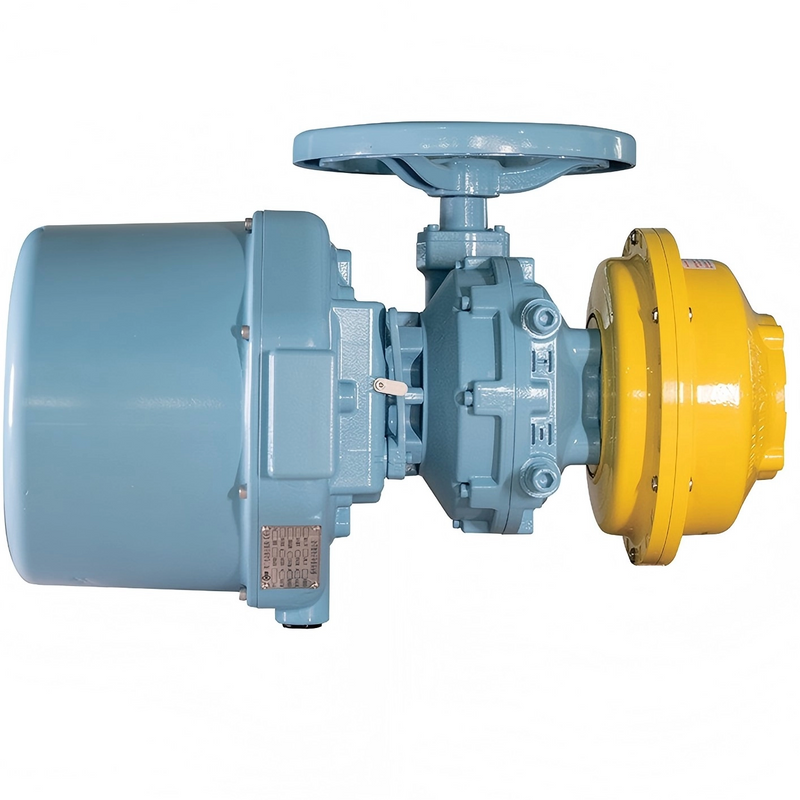
Electric valve actuators operate through a series of well-coordinated steps, transforming electrical signals into mechanical movement. This process ensures precise control over fluid flow in various applications. Let's break down how these actuators function.
1. Signal Reception from Control Systems (PLC/DCS) The process begins when the actuator receives a signal from a control system, like a PLC (Programmable Logic Controller) or DCS (Distributed Control System). This signal indicates whether the valve should open or close.
2. Motor Activation and Movement Generation Once the signal is received, the electric motor activates. It converts electrical energy into rotational or linear motion, depending on the actuator type. This initial movement sets the entire system in motion.
3. Torque Amplification Through the Gearbox The motor's output is often insufficient to operate the valve directly. Here, the gearbox comes into play. It amplifies the torque generated by the motor, enabling the actuator to handle larger valves effectively.
4. Mechanical Movement to Open or Close the Valve The amplified torque is then transmitted to the valve mechanism. For quarter-turn valves, such as ball or butterfly valves, this results in a swift rotation. For linear valves, like gate or globe valves, the movement is straightforward, pushing or pulling the valve stem.
5. Feedback and Stopping Mechanisms Feedback systems are crucial for ensuring accurate operation. Sensors monitor the valve's position and torque, providing real-time data to the control unit. This information allows the actuator to stop at the correct position, enhancing precision.
Electric valve actuators typically operate in two primary motion types:
● Rotary Motion for Quarter-Turn Valves
○ Ball Valves: They open and close with a simple quarter turn, providing quick shut-off.
○ Butterfly Valves: These use a rotating disc to regulate flow, ideal for large pipelines.
● Linear Motion for Gate and Globe Valves
○ Gate Valves: They lift a gate out of the flow path, creating minimal flow resistance when fully open.
○ Globe Valves: These valves use a movable disk to control flow, allowing for precise regulation.
Safety is paramount in industrial applications. Electric valve actuators include several features to ensure reliable operation:
● Torque Limitation and Stroke Protection These features prevent the actuator from applying excessive force, which could damage the valve or the actuator itself. They ensure that the actuator operates within safe limits.
● Fault Diagnosis Capabilities Modern electric valve actuators come equipped with diagnostic tools. These tools can detect issues like motor failure or misalignment, alerting operators to potential problems before they escalate.
Safety Feature | Description |
Torque Limitation | Prevents excessive force on the valve |
Stroke Protection | Ensures the actuator doesn't exceed its range |
Fault Diagnosis | Alerts operators to operational issues |
By understanding these principles, we can appreciate how electric valve actuators play a vital role in fluid control systems. Their design combines efficiency, safety, and precision, making them indispensable in various industries, from water treatment to petrochemicals.
Electric valve actuators come in various types, each designed for specific applications and operational needs. Understanding these types helps in selecting the right actuator for your system. Let’s explore the main categories.
● Quarter-Turn Actuators These actuators are ideal for valves that require a simple 90-degree rotation to open or close. Commonly used with ball and butterfly valves, they provide quick and efficient operation.
● Multi-Turn Actuators Multi-turn actuators are designed for valves that require several revolutions to operate fully. They are typically used with gate and globe valves, allowing for precise control of flow rates.
● Linear Actuators Linear actuators provide direct linear movement to the valve stem. They are often used in applications where precise positioning is crucial, such as in chemical processing and wastewater treatment.
● Intelligent Integrated Actuators These advanced actuators combine the electric motor, gearbox, and control unit into a single unit. They offer features like real-time monitoring and diagnostics, enhancing operational efficiency and reliability.
Actuator Type | Motion Type | Common Applications |
Quarter-Turn | Rotary | Ball and butterfly valves |
Multi-Turn | Rotary | Gate and globe valves |
Linear | Linear | Chemical processing |
Intelligent Integrated | Rotary/Linear | Various industrial uses |
Each actuator type has its own best use cases:
● Quarter-Turn Actuators:
○ Ideal for quick shut-off applications.
○ Commonly found in HVAC systems and water treatment plants.
● Multi-Turn Actuators:
○ Suitable for applications requiring gradual flow adjustments.
○ Widely used in oil and gas pipelines.
● Linear Actuators:
○ Perfect for precise control in chemical dosing systems.
○ Frequently used in power plants and water treatment facilities.
● Intelligent Integrated Actuators:
○ Great for smart manufacturing processes.
○ Used in industries where data collection and diagnostics are essential.
Hengchun offers a range of electric valve actuators tailored to meet diverse industry needs. Here are some key products:
● Electric Actuators: Reliable and efficient, suitable for various applications.
● Electro-Hydraulic Actuators: Provide high torque and are ideal for heavy-duty valves.
● Nuclear-Grade Actuators: Designed for safety and reliability in critical environments.
Hengchun's expertise in actuator technology ensures that you can find the right solution for your specific requirements. Their products are engineered to provide durability and performance, making them a trusted choice in the industry.
By understanding the different types of electric valve actuators and their applications, you can make informed decisions that enhance your operations and ensure optimal performance.

Choosing the right electric valve actuator is crucial for ensuring efficient and reliable operation in your system. Several factors come into play when making this decision. Let’s look at what you should consider.
● Torque and Power Requirements Torque is a key factor in actuator selection. It’s essential to determine the breakaway torque needed to start the valve operation. This ensures the actuator can handle the load without stalling.
● Valve Compatibility and Mounting Standards Ensure the actuator is compatible with your valve type. Check for mounting standards, such as ISO 5211, which provides a universal fitting for various actuators and valves. This compatibility simplifies installation and maintenance.
● Environmental Considerations The actuator’s operating environment can significantly impact its performance. Consider:
○ Temperature Range: Ensure the actuator can operate effectively within the expected temperature limits.
○ IP Rating: The Ingress Protection rating indicates how well the actuator can withstand dust and moisture. Choose a rating suitable for your environment.
● Control Options Different applications may require different control methods. Decide whether you need:
○ On/Off Control: Suitable for simple applications where the valve is either fully open or closed.
○ Modulating Control: Necessary for applications requiring precise flow regulation.
Selecting the wrong actuator can lead to operational issues. Here are common pitfalls to watch out for:
● Choosing the Wrong Actuator Type Selecting an actuator not suited for your valve type or application can lead to inefficiencies. For instance, using a quarter-turn actuator for a multi-turn valve can cause performance issues.
● Ignoring Environmental Factors Overlooking the environmental conditions can result in actuator failure. For example, using an actuator without the proper IP rating in a wet environment can lead to damage.
● Not Considering the Actuator's Duty Cycle Duty cycle refers to the amount of time an actuator can operate without overheating. Failing to consider this can lead to premature wear and tear. Ensure the actuator can handle the operational demands of your application.
Factor | Importance |
Torque and Power Requirements | Essential for effective valve operation |
Valve Compatibility | Ensures proper fit and function |
Environmental Considerations | Protects against damage and failure |
Control Options | Matches actuator function to application needs |
By keeping these factors in mind, you can select an electric valve actuator that meets your needs and enhances operational efficiency. Companies like Hengchun offer a range of products designed to meet various specifications, ensuring you find the right fit for your applications.
Understanding how electric valve actuators work is essential for effective fluid control.
These devices offer numerous benefits, including precision, efficiency, and reliability.
Their applications span various industries, from oil and gas to water treatment.
Consider electric valve actuators for your fluid control needs.
Reach out to Hengchun for expert advice or product inquiries today!
A: The lifespan varies, typically ranging from 10 to 20 years, depending on usage and maintenance.
A: Regular checks of feedback signals and sensor readings can indicate proper functionality.
A: Yes, certain models are designed for hazardous environments, featuring appropriate IP ratings and safety certifications.
A: Electric valve actuators improve energy efficiency by providing precise control, reducing energy waste during operation.
A: While initial costs may be higher, electric valve actuators often offer long-term savings through reduced maintenance and operational efficiency.


